
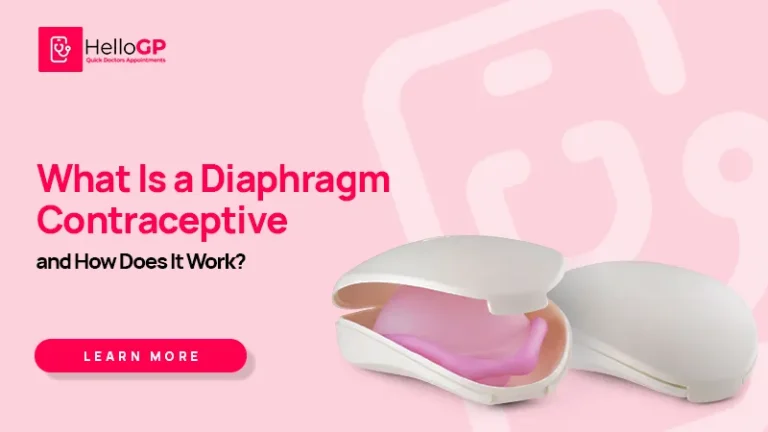
A diaphragm contraceptive is a soft, dome-shaped silicone cup that you place inside your vagina before sex. It covers the cervix (the entrance to the uterus) so sperm cannot get through. It contains no hormones, which makes it a non-hormonal barrier method of contraception. In Australia, the only diaphragm available is Caya, and it is used with a special gel.
If you are weighing up diaphragm birth control, this guide explains how a contraceptive diaphragm works, how to use it, how well it prevents pregnancy and what the downsides are, using Australian health sources. To compare methods with a doctor, you can speak to a HelloGP doctor online about contraception.
What is a diaphragm contraceptive?
A diaphragm is a soft, shallow silicone cup with a flexible rim. Healthdirect describes it as a dome-shaped cup that you place in your vagina before sex so that it covers your cervix.
A few facts specific to Australia:
- One brand, one size. Caya is the only diaphragm available in Australia. It comes in one size and fits about 8 out of 10 users, so it will not suit everyone.
- It is used with gel. Caya is used with a lactic acid gel called Caya Gel. The gel helps maintain the vagina’s natural acidic environment. It is not a spermicide.
- It is reusable. With good care, the same diaphragm can last up to 2 years.
- It can be hard to find. Healthdirect says diaphragms are not as widely available as other types of contraception.
How does a diaphragm prevent pregnancy?
A diaphragm works as a physical barrier. Once it is in the right place, it sits over the cervix and stops sperm from entering the uterus, so sperm cannot reach an egg. The gel is used with the diaphragm, and together they form the barrier. The Better Health Channel notes that sperm die off quickly in the vagina.
- You can insert it yourself, although a doctor or nurse can show you how to position it correctly.
- Healthdirect says it starts working straight away once it is correctly in place and used with the gel.
- It must stay in for at least 6 hours after sex. Healthdirect says taking it out earlier risks pregnancy.
How to use a contraceptive diaphragm
Always follow the instructions that come with your Caya diaphragm. Before you rely on it, ask a doctor or nurse to check the fit and show you how to insert it. This needs to be done in person. These steps summarise what Australian health services describe:
- Check it first. Look over the diaphragm for tears, holes or wear before each use.
- Add the gel. Put about a teaspoon (4 mL) of gel on the side of the cup that will face your cervix.
- Insert it. Place the diaphragm in your vagina so it covers the cervix, before any genital contact. You can insert it up to 2 hours before sex. If more than 2 hours pass before sex, the Better Health Channel says to add more gel using the applicator.
- Having sex again? Leave the diaphragm in and add more gel each time. Healthdirect says the gel should be reapplied deep inside the vagina every 2 hours if there is repeated sex.
- Leave it in. Keep it in for at least 6 hours after sex.
- Remove and wash it. Do not leave it in for more than 24 hours. Wash it with mild soap and water, and dry it completely before storing it.
Use only water-based or silicone-based lubricants. Oil-based products can reduce how well a diaphragm works.
Practise inserting and removing it a few times before you rely on it. If it is uncomfortable, or you can feel it, it may not be in the right position. A doctor or nurse can help.
How effective is diaphragm contraception?
A diaphragm works well when it is used correctly every time, but it is less effective than some other methods, such as the implant or an IUD. Australian sources give slightly different figures:
- The RACGP and Sexual Health Victoria give about 86% with perfect use and 82% with typical use. The Better Health Channel also gives 86% when used correctly every time, and says it may be lower if used incorrectly.
- Healthdirect gives 84% with perfect use and 83% with typical use.
With typical use, that means about 17 to 18 in 100 people using a diaphragm become pregnant in a year. The key message is the same across sources: how well it works depends heavily on using it correctly and consistently.
Things that can make a diaphragm less effective include:
- not using it every time you have sex
- not inserting it correctly, or it moving out of place during sex
- not using the gel, or not using extra gel when you have sex again
- inserting it more than 2 hours before sex without adding more gel
- taking it out before 6 hours have passed after sex
- tears, holes, wear or damage, or using one that is past its expiry date or older than 2 years
- using oil-based lubricants
If you had sex without your diaphragm, or had a problem with it, and you did not use other contraception, you may need emergency contraception. A pharmacist, nurse or doctor can advise you.
How does it compare with other non-hormonal methods?
| Method | Hormones | Effectiveness with perfect use | Effectiveness with typical use | Protects against STIs? |
|---|---|---|---|---|
| Diaphragm | None | 86% | 82% | No |
| Male (external) condom | None | 98% | 88% | Yes |
| Female (internal) condom | None | 95% | 79% | Yes |
| Copper IUD | None | More than 99% | More than 99% | No |
Advantages of a diaphragm
According to Healthdirect, the Better Health Channel and Sexual Health Victoria, the main benefits are:
- It has no hormones, so it can suit people who cannot use hormonal contraception for medical reasons.
- You only need to use it around the time of sex, and you can insert it hours before.
- It can be reused for up to 2 years.
- You can buy it without a prescription.
- It has little or no side effects for most users.
- It does not affect your future fertility.
Diaphragm side effects and disadvantages
If you have been wondering about diaphragm side effects, or what the disadvantages of using a diaphragm are, these are the main points:
- It is less effective than many other methods. See the effectiveness section above.
- It can take practice. Insertion and removal can feel uncomfortable, and it can be placed incorrectly.
- Irritation. A small number of users get irritation of the vagina or penis. Silicone allergy is very rare, but can cause itching, redness or swelling.
- Bladder infections. There is a greater chance of a bladder infection or urinary tract infection (UTI), so it may not suit you if you are prone to them.
- Toxic shock syndrome. In exceptionally rare cases, a diaphragm might cause toxic shock syndrome. Healthdirect says this is largely linked to improper use, such as leaving it in for more than 24 hours.
- No STI protection. A diaphragm does not protect against sexually transmitted infections. A condom is the best way to lower the risk of STIs with new partners.
- Not for use during your period. The Better Health Channel says other methods should be used then.
- Cost and availability. It costs more upfront than many methods and can be harder to find.
If you become suddenly and seriously unwell while using a diaphragm, call triple zero (000).
Who a diaphragm may not suit
A diaphragm might not be a good option if you:
- have had toxic shock syndrome before
- are prone to bladder infections
- gave birth 6 weeks ago or less, because the size you need may change as the uterus returns to its usual size (check the fit again after this time)
- have a difference in the shape of your vagina or uterus that may stop the diaphragm covering the cervix correctly
- find it difficult to tell whether the diaphragm is covering your cervix
- are allergic to silicone, or your partner is
- are living with HIV, are at high risk of HIV, or are using antiretrovirals
If a diaphragm is not right for you, a doctor can talk you through other types of contraception.
Where to get a diaphragm in Australia
You do not need a prescription. Caya can be bought from some pharmacies, some sexual and reproductive health and family planning clinics, and online stores. Healthdirect says diaphragms may be harder to find than other types of contraception, and Sexual Health Victoria notes that changes to distribution have made access more difficult.
Healthdirect lists the cost at about $100 to $130 per diaphragm, plus about $30 per tube of gel. Prices can change, so check with the seller.
Frequently Asked Questions (FAQs)
Is a diaphragm hormonal?
No. A diaphragm is a non-hormonal barrier method. It works by physically blocking sperm from entering the uterus.
How long does a diaphragm last?
It can last up to 2 years if you look after it. Check it for tears, holes, or wear before each use, and replace it if it is damaged, worn, or past its expiry date.
Does a diaphragm protect against STIs?
No. Healthdirect says internal and external condoms are the only types of contraception that protect against STIs.
Do I need a prescription for a diaphragm?
No. You can buy Caya without a prescription, but it is a good idea to have a doctor or nurse check the fit and show you how to insert it.
How long should a diaphragm stay in after sex?
At least 6 hours, and no longer than 24 hours in total.
What should I do if my diaphragm moved or I took it out early?
There is a chance of pregnancy. Consider emergency contraception and speak to a pharmacist, nurse or doctor as soon as you can.
HelloGP - Disclaimer
This article is general information and is not a substitute for personal medical advice. Targets differ between people, so always discuss your results and any treatment with your doctor. Telehealth is not suitable for emergencies. If you have an emergency or are at immediate risk, call 000 or visit your nearest emergency department.
When to talk to a GP
Choosing the right contraceptive method depends on your health, your preferences and your pregnancy prevention needs. A GP can help you compare non-hormonal and hormonal options and discuss possible side effects. An online doctor cannot check the fit of a diaphragm or show you how to insert it. That needs an in-person visit to a GP, nurse or sexual health clinic. If you would like to talk through your options from home first, you can speak to a HelloGP doctor online about contraception.